
Supporting Endometriosis Naturally
Supporting Endometriosis Naturally
 Endometriosis is a common condition where the lining of the womb implants and grows outside of the womb itself. It takes an age to diagnose (women wait an average of 7.5 years before receiving a clear endometriosis diagnosis, and up to 75% of affected patients may be missed). It is often mis-diagnosed and statistics indicate affects 1 in 10 women! Rarely un-symptomatic, it can lead to incredibly pain, sub-fertility or even an inability to conceive naturally (35% of women).
My approach asks why endometriosis has presented and how can I support your body to rebalance itself as best it can. How do I do this?Fundamentally I believe endometriosis has the potential to develop due to:Oestrogen/progesterone/testosterone imbalancesInflammatory pathways/cortisolMethylation (liver) and metabolic pathways (did you know your liver stores oestrogen?)Genetic pre-disposition and nutrigenomic SNP’s – including MTHFRSurgeryAssisted conception, birthing, womb traumaEmotional traumaLifestyle/diet and environmental toxins
Book your appointment with Justine now:Endometriosis is mainly diagnosed aged 30+ but it can affect all ages. I am seeing this uncomfortable disorder more and more within my clinic. Whilst western medicine considers it is mostly seen in women who have not had children I disagree – I consider this more of a symptom. From my clinical experience I believe genetics SNPS also known as polymorphisms play an active part here, you can also consider family history (mother, grandmother, great grandmother etc); womb surgery or even other surgery, scarring such as within a traumatic birthing or investigative procedure, terminations and even miscarriages may have triggered it’s progression. We also need to consider farming methods, chemicals found in toiletry and cosmetic/cleaning products), convenience foods, your lifestyle, other environmental toxins, your ability to methylate (MTHFR), other genetic SNPS (ESR1, ESR2, COMT,CYP17A1, are a few plus the inflammatory pathway SNPS) and how you utilise hormones and detoxify.
Let me explain a little about Endometriosis to you.
- What it is: Tissue that looks and acts like endometrial tissue but develops in unusual places, including on the surface of your ovaries, on the outside of your womb, on a specific lining within the womb or in other tissues of the abdomen. I have even had a client who has it within her nasal passages. This caused monthly nose-bleeds!
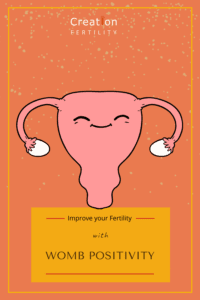 What you womb looks like
 - Hollow, upside down pear-shaped organ about the size of your closed fist located in your pelvic basin/lower abdomen (belly), between the bladder and the rectum (above pubic hair, below tummy button) .
- The upper end of your womb (also known as a uterus) is connected to your fallopian tubes, whilst the lower, narrow end, called the neck, becomes the cervix, which extends into the back of the vagina.
- The upper portion is the larger part, and this is where your baby grows and is nourished during pregnancy.
- Your womb (uterus) is thick-walled and elastic, otherwise it wouldn’t be able to expand whilst holding your growing baby. It also has the ability to return to it’s normal size after your baby has been born.
The layers of your womb/uterus is made up of 3 special layered lining of tissue and muscle.
- The innermost layer is called the endometrium. Within each monthly cycle endometrium develops lining the main body of your womb. This where a fertilized egg implants but if a pregnancy doesn’t happen the lining is no longer needed so your womb discards it and it leaves as menstrual flow. This is repeated monthly in case a pregnancy occurs and continues monthly from puberty to menopause except during pregnancy or specific/abnormal circumstances.
- The second/middle layer is the myometrium. This gives your womb its strength and elasticity. The myometrium expands during pregnancy and contracts during the birth process forcing your baby out of the uterus into the birth canal.
- The outer third layer is the perimetrium. This is a thin external covering for the other two layers. Did you know your womb is held loosely in place within the pelvic cavity by several sets of ligaments: the broad ligament, the round ligament and the uterosacral ligament?
Although your womb is not directly involved in sex itself it does change during sexual excitement. When we are aroused our womb lifts, increases in size and remains enlarged until orgasm or until stimulation ends. After menopause the reduced supply of oestrogen causes our womb to shrink. It no longer enlarges in response to sexual stimulation but our sexual excitation, orgasm and fulfilment remain which means we can enjoy sex as much as before menopause. More about this another day!
Symptoms of Endometriosis
| Painful periods (dysmenorrheal) | Very Short Periods (less than 4 days) | Irregular or lack of periods | Prolonged bleeding cycles (7 days and more) | Cramps |
| Large Clots | Abdominal Bloating | Back Pain | Nausea and Vomiting | Severe and increasing abdominal pain throughout the month |
| Hypermenorrhea (heavy periods) | Irritable bowel (IBS) | Bladder disorders and urination frequency | UTI’s | Painful and/or uncomfortable sex |
| Recurrent miscarriage | Fertility issues | Nausea and Vomiting | Reduced ability to control bladder | Vaginal dryness |
| Vaginal discharge | Pelvic pressure and pain | Constipation | Backache and leg pain | Annovulation |
There are 3 forms of Endometriosis plus Adenomyosis.
- Superficial Peritoneal Endometriosis: The most common form, involving implants on the surface of the peritoneum (the lining of the pelvic cavity). It is considered the least severe form, typically appearing as shallow lesions and are often called adenomyomas. This form is localized and is an encapsulated collection of endometrial cells with well defined borders. They appear much like fibroids and are often mistaken as such. Many can be safely removed from the uterus
- Ovarian Endometriomas (Chocolate Cysts): These are fluid-filled, dark brown cysts that form within the ovaries. They are often associated with, and can cause, severe pain and reduced fertility.
- Deep Infiltrating Endometriosis (DIE): A severe form where endometrial tissue penetrates deep into organs, such as the bladder, bowel, or the recto-vaginal fascia. It can cause significant scarring, pain during bowel movements, or pain during urination and has the potential to develop into cancer in some women. The most common symptoms are heavy menstrual periods, bleeding between periods, and bleeding after menopause. It is often diagnosed post surgery or after investigative tests.
 · Endometrial cells from the lining of the endometrial cavity, migrate from that lining, most commonly into the side or back wall of the uterus and attach to muscle. As these cells respond to monthly hormonal changes, blood can get trapped in the myometrium producing a hard and enlarged uterus.
· Adenomyosis is most frequently seen in women in their early to middle 40s and is often associated with hormone imbalance…usually excessive oestrogen supply.
· Various published studies have shown that 12% of patients with Adenomyosis also have been diagnosed with endometriosis in sites outside their womb but within the pelvis. As high as 62% of women who had hysterectomy were found to have this disease on pathology reports.
Endometriosis can spread out within the uterine myometrium. As the endometrial cells invade the uterus becomes enlarged and hardened, making pelvic exams and intercourse very painful. At cellular level, womb muscle cells become damaged as they lose their ability to stretch and contract. This is the main reason for miscarriages during the 2nd and early 3rd trimester of pregnancy.
 Justine Evans ND, Hormone Alchemist and Wisewoman. Combining functional medicine; food as medicine, nutritional therapy, body therapies plus traditional naturopathic practices to support your hormone health conditions. Justine runs clinics in Stroud, Gloucestershire and online. She can be contacted on 07747133170
[…] Endometriosis and the womb. […]
[…] post failed assisted conception procedures, fibroids, poly cystic ovaries, polyps and cysts, endometriosis, when preparing for pregnancy or when trying to conceive. Other reasons to consider your liver […]
[…] trauma (emotional or physical), bleed irregularities, heavy periods, fibroids, ovarian cysts, endometriosis, poly cystic ovaries, strong peri-menopause symptoms or something else? For whatever reason you may […]