
Hormone testing to support you
This month I am discussing hormone testing and sharing 5 functional hormone and nutrigenomic panels which I regularly use within my clinical practice. Of course, all clients receive a personalised programme which includes in-house health screening too. I often utilise one of more of these functional hormone testing panels to assess specific hormone levels. This article has been written simply to help you understand some of their benefits. In truth there are many other hormone tests and functional lab profiles I consider but I shall write about them another day!
Hormone testing: AMH – and AMH/FSH
What it is : This is a simple blood test.
Why do it: All women are born with their eggs. Unlike sperm we don’t produce additional eggs throughout our lifetime. So – once you have reached puberty your egg reserve reduces with each natural monthly cycle. The average age for a woman to become a mother in USA is 26 years of age – and 30 in the UK.
This hormone test helps you assess how to proceed with your reproductive health including PCOS/PMOS – this can only be a good thing.
- AMH means “anti-Müllerian hormone” which is a hormone secreted by the cells of developing antral and pre-antral follicles (or egg sacks) in the ovaries. Once secreted AMH stops too many immature eggs from maturing at the same time.
- AMH is a strong indicator of a woman’s ovarian reserve (OR) which is the ovaries’ ability to produce good-quality eggs.
- Good AMH levels suggest good quality eggs which indicates a higher chance of a natural conception.
- AMH and FSH levels are sometimes tested together to help assess overall ovarian reserve. Each hormone reflects the follicles in the ovaries at different stages of development. FSH and AMH levels move in the opposite direction as women age, with AMH going down and FSH going up, indicating the age-related natural deterioration of ovarian reserve (DOR). DOR is one of the major causes of infertility.
- Very low AMH levels can signal that the body is preparing to enter into menopause or can be associated with recurrent miscarriage.
- High AMH and high FSH can signal hypoandrogenic polycystic ovary syndrome (PCOS/PMOS)
- Aside from the normal, age-related decline, almost anything that disrupts the feedback cycle of follicular development and AMH secretion can cause low anti-mullerian hormone levels. This can be due to an autoimmune attack on the ovaries or it may be genetic. Women with a particular type of FMR1 gene are more likely to develop DOR at a younger age.
- Depending on your AMH levels assisted conception clinics develop different treatment approaches to maximize your pregnancy chances. Of course, I do this too – using personalised nutrition programmes and body treatments to support your ovaries and reproductive health.
- An AMH test also helps you to make decisions – such as continue a natural approach towards pregnancy; whether you may wish to consider freezing some of your eggs if you are planning a baby later or whether to look at other assisted fertility techniques. Remember, this test is not negative – it can be a huge boost because your results may be super positive!
When you should do it : Anytime though out your cycle. The centre for human reproduction offers a great video .

BUY YOUR Creation Fertility Toolkit
Hormone testing: Lifecode GX Nutrigenomics
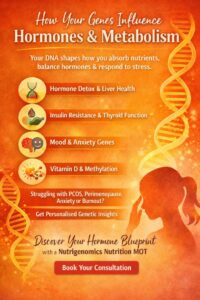 What it is: Genetic tests quite simply are a snap shot of you at DNA level. As a registered Lifecode Gx® Nutrigenomics Practitioner I find their profiles invaluable to help build personalised lifestyle and nutrition programmes and understand your pre-disposition to various health disorders which enables me to actively support your gene expression with naturopathy. Whilst I use a number of their nutrigenomics tests within my practice today I am introducing 2 hormone tests which I use regularly within my clinics.
- I) DNA Methylation Testing: Methylation is critical for keeping your body and brain biochemistry in balance. Methylation occurs in the liver and can impact hormonal health conditions including fertility, pregnancy, menopause, male health conditions and so much more. Common genetic variants (SNPs) can impact your natural ability to methylate within the 5 methylation cycles (folate, methionine, neurotransmitter, transsulphation and urea. Any one or all of these can increase susceptibility to imbalances and health conditions including heart disease, depression, diabetes, chronic fatigue, autoimmune disease, poor foetal development and premature ageing. This report informs your personal requirements for B vitamins, vitamin D, amino acids, zinc, magnesium and much more to enable managing risk and optimise your health through a personalised nutrition programme.
- ii) Lifecode GDX Hormone Profile . This DNA test examines the best evidenced genes and variants (SNP’s that impact steroid hormones – progesterone, oestrogens, androgens (testosterone, DHEA) and cortisol; adrenaline and insulin). This is one of my go-to reports for hormonal health issues including peri-menopause, andropause, low libido, acne, hair loss, sperm count, excess facial hair, PCOS, PMS, mood swings, substance misuse, poor memory, weight gain and hormone sensitive cancers. I often combine the 2 tests.
Book your Hormone MOT or a Nutrigenomics Nutrition MOT with Justine Evans ND
Hormone testing: The Dutch Test
 There are 3 forms of DUTCH test which I regularly use
- The most economic hormone test is the DUTCH Complete which helps identify the cause for hormone imbalances in men and women
- offers insight into reproductive disorders such as PCOS, weight gain, fatigue, low libido, premenstrual syndrome, mood swings, sleep issues, mood disorders and prostate issues in men and can be used for menopause too.
- Used to gather baseline measurements.
- Menopause and HRT (hormone replacement therapy). the Dutch test complete provides insights to optimise hormone balance, assess hormone metabolism pathways, and ensure both safety and efficacy. Understanding how hormones are processed can help clients understand whether HRT would suit them and support tailored HRT approaches.
-
Key Markers Included in the DUTCH Test:
- Sex Hormones & Metabolites: estradiol, estrone, estriol, progesterone, testosterone & their metabolites. Helping to assess HRT efficacy and metabolism.
- Adrenal Function: measuring cortisol and cortisone patterns to evaluate stress response which plays a crucial role during peri- and postmenopause.
- Methylation & Detox Pathways: 2-OH, 4-OH, 16-OH and 2-Methoxy estrogen metabolites to assess estrogen detoxification and potential health risks associated.
- Neurotransmitter Metabolites: Insights into mood, energy, and cognitive function.
Why Use this hormone test with HRT?
- HRT – ensure metabolism of estrogen, progesterone, and testosterone to support potential side effects.
- Manage risk – identify poor estrogen detoxification pathways that could increase the risk of estrogen dominance and associated conditions.
- ii) Another version of the Dutch test is the COMBINED PANEL, which includes the DUTCH Complete and the DUTCH CAR (Cortisol Awakening Response).
- Hormone health – assess adrenal and stress hormones alongside reproductive hormones for a complete picture.
- Measures daily free cortisol, the oxidative stress marker 8OHdG, melatonin, six organic acids and the CAR, which is an excellent snapshot of HPA axis function.
- A low CAR can be a result of an underactive HPA axis, psychological burnout, seasonal affective disorder (SAD), sleep issues, PTSD, chronic fatigue, chronic pain, hypertension, gastrointestinal issues, post-natal depression and autoimmune disease. An elevated CAR can be the result of an overactive HPA axis, anticipatory stress, glycaemic dysregulation, pain and depression.
- The form of functional test is easy to use. It only requires a series of urine samples which are taken using filter paper collection strips.
iii) The most comprehensive functional test is the Dutch Complete with Cycle Mapping . This provides a comprehensive assessment of sex hormones, adrenal function and the entire menstrual cycle.
- DUTCH Cycle Mapping delivers a clear understanding of the overall menstrual cycle by tracking and evaluating hormones throughout the month.
- Nine targeted oestrogen and progesterone measurements provide important details on hormone levels in the follicular, ovulatory and luteal phases of the cycle.
- Includes the The DUTCH Complete profile as above (35 different hormones; oestrogen, progesterone, testosterone, DHEA-S and cortisol along with their metabolites. It also measures daily free cortisol, the oxidative stress marker 8OHdG, melatonin and six organic acids including markers for vitamin B12 (methylmalonate), vitamin B6 (xanthurenate), glutathione (pyroglutamate), dopamine (homovanillate), norepinephrine/epinephrine (vanilmandelate), and serotonin (5-hydroxyindoleacetate))
- This test is suitable for those with irregular cycles, super helpful with fertility issues including unexplained infertility, luteal phase defects, PCOS/PMOS, irregular cycles, PMS and PMDD, amongst many other hormone related conditions including negative assisted conception response and stress related response disorders.
- Urine collection: 25 urine specimens over your menstrual cycle.
Hormone testing: Adrenal/Thyroid Tests
 What it is: Again there are various forms of adrenal thyroid tests – some a particularly suitable for hormone issues relating to stress and/or thyroid imbalances.
Why do it: The ovaries, adrenals, and thyroid are intimately co-dependent hormonally on each other for optimal function. If the adrenal glands are weak, there is often concurrent thyroid malfunction and menstrual cycle irregularity. Similarly, an under-active thyroid often makes adrenal fatigue worse off. Lastly, those who suffer from ovarian hormonal imbalance such as oestrogen dominance often exacerbate any pre-existing sub-clinical hypothyroidism. I see adrenal fatigue , sub clinical thyroid and ovarian/adrenal and thyroid axis disorders on a regular basis within my clinic. Any one of these can impact on hormonal balance – anything from PMS – through to endometriosis menstrual irregularities, ovulation & conception issues, pregnancy/miscarriages and also menopausal symptoms. I can talk about the thyroid and adrenals for days but this is a great laboratory test for adrenals, thyroid and auto immune health.
- I) Adrenal evaluation is commonly considered for patients with a host of complaints resulting from chronic psychological or physiological stress. However adrenal evaluation is also vital for treating patients with hypothyroidism, due to the close interaction of these endocrinal systems. This test includes salivary cortisol, DHEA and SIgA. Many of the symptoms of adrenal fatigue can be equally attributed to thyroid dysfunction, and poor adrenal reserve can also lead to secondary hypothyroid function.
- Ii) The complete thyroid conversion test is necessary to assess thyroid regulation – from TSH – through to T4, RT4, RT3 and Urinary T3 levels to provide a sensitive measure of the active thyroid hormones to give an accurate reflection of overall thyroid hormone levels. Thyroid conditions can prove difficult to diagnose, especially subclinical thyroid dysfunction, which is a common clinical problem where serum thyroid markers may often be ‘normal
- Symptoms related to thyroid and/or adrenal hypo-function: • Excessive Fatigue • Cold intolerance • Low body temperature • Depression • Anxiety • Irregular bowel function • Low sex drive • Menstrual irregularities • sub and (infertility) • Menopausal problems • recurrent miscarriage • Unexplained weight gain • Difficulty losing weight • Poor immune status • oestrogen dominance
Dependant on the test chosen but generally urine, saliva and blood serum test. Costs vary
Click here to read about our in house Asyra Health Screening
Hormone testing: Prolactin
 A prolactin hormone (PRL) test measures how much prolactin you have in your blood. The hormone is made in your pituitary gland, which is located just below your brain. When women are super stressed, pregnant or lactating their prolactin levels increase so they can make breast milk. However, I see many women with high cortisol and prolactin especially if they suffer with anxiety and/or depression (even when they are on anti-depressants) which interferes with their ability to conceive and also oestrogen regulation. Creation Fertility can organise a private prolactin test for you but many NHS GP’s can also offer this service.
- Symptoms of prolactin in women
- Irregular or no periods
- Chronic stress
- infertility
- breast milk discharge when you’re not pregnant or nursing
- PCOS can also affect the body’s ability to remove prolactin
- Breast tenderness not associated with your cycle
- Menopausal symptoms such as hot flashes and vaginal dryness.
- It helps in the metabolism of sub cutaneous fat, carbohydrate metabolism and synthesis of vitamin D
- For men
- Decreased sex drive
- Difficulty in getting an erection
- Breast tenderness or enlargement
- Breast milk production (very rare)
What it is : blood test and can be taken anytime though-out your cycle.
Prolactin and Infertility science report https://www.intechopen.com/books/prolactin/prolactin-and-infertility
Flourish and Harvest Mentorship Programme – starts May and comes with Lifecode Nutrigenomics testing
Enroll for 13 Moons Wellness Programme
Naturopath in Stroud, Gloucestershire
Women’s Health Clinic Twickenham
 Justine Evans ND is a Hormone Alchemist and WiseWoman. With over 29 years in clinical practice she holds a degree in nutritional therapy and is a registered naturopath (ND), blending her disciplines with plant medicine, homeotoxicology, and intuitive healing. She is deeply passionate about seasonal living and empowering everyone to take natural control of their health naturally. She runs a private hormone health clinic in London, Stroud and on line too!



[…] 5 hormone laboratory tests to support your fertility […]